Let’s start with a simple truth: retinol serum can help skin look smoother and more even, but it is not a product to rush. Used slowly and carefully, it is one of the most popular evening cosmetic ingredients for adults who want a more refined-looking complexion. Used too often or too strongly at first, it can cause dryness, flaking, or irritation.
Here is the reality check: retinol is a cosmetic ingredient, not a medical treatment. This beginner guide explains how to start low and slow, how much to use, when to use it, and how to support skin with moisturiser and morning sunscreen.
Quick Verdict: Retinol Serum at a Glance
- Best for: adults who want smoother-looking skin and a more even-looking tone.
- Best time to use it: at night, after cleansing.
- Best starting approach: a low strength, a pea-size amount, two nights a week at first.
- Best to pair with: a gentle moisturiser and daily sunscreen in the morning.
What Is Retinol Serum?
Retinol is a form of vitamin A used in cosmetic skincare. It is related to retinal and to prescription retinoids, but over-the-counter retinol serums are cosmetic products with lower strengths and a gentler action. In cosmetic terms, retinol can help improve the appearance of uneven texture, dullness, and fine lines caused by dryness and ageing appearance, by supporting normal skin renewal. It does not cure skin conditions, and it is not a substitute for medical advice.
Retinol products also include related ingredients such as retinyl palmitate, a milder ester, and retinaldehyde, which is often described as a step between retinol and stronger forms. Beginners usually do best with a low-strength retinol or a gentle derivative, used in a simple formula with soothing moisturising ingredients such as ceramides, squalane, or niacinamide.
Retinol Serum Comparison: Strengths at a Glance
| Strength / Type | Best For | What to Know |
|---|---|---|
| Low (around 0.1%–0.3%) | Beginners and sensitive skin | Start here; use two nights a week at first |
| Moderate (around 0.5%) | People already comfortable with retinol | Increase only after weeks of comfortable use |
| Higher (around 1%) | Experienced users | More likely to cause dryness if used too often |
| Gentle derivatives | Very sensitive skin | Often described as slower and gentler |
How to Start Retinol Safely: Step by Step
Step 1: Patch Test First
Apply a small amount behind the ear or on the jawline for a few nights. If skin feels comfortable, you can begin facial use.
Step 2: Use a Pea-Size Amount at Night
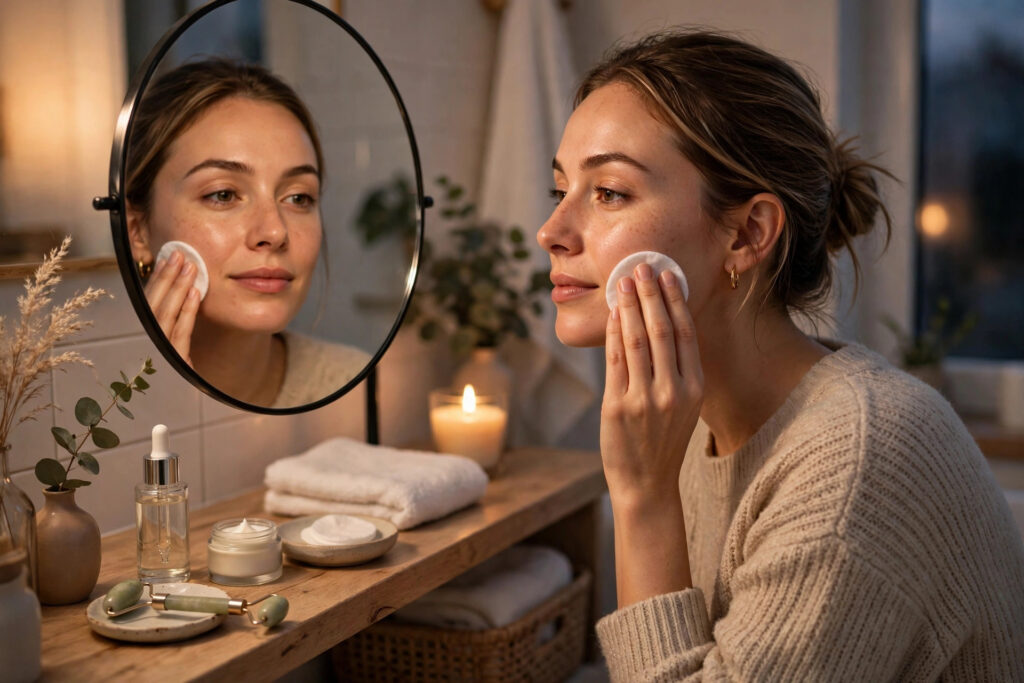
After cleansing in the evening, wait until skin is dry, then apply a pea-size amount to the whole face. Avoid the eye corners and lip area at first. Follow with a gentle moisturiser.
Step 3: Start Two Nights a Week
Use it on two non-consecutive nights per week for two to three weeks. If skin feels comfortable, increase to every other night, then nightly only if your skin tolerates it well.
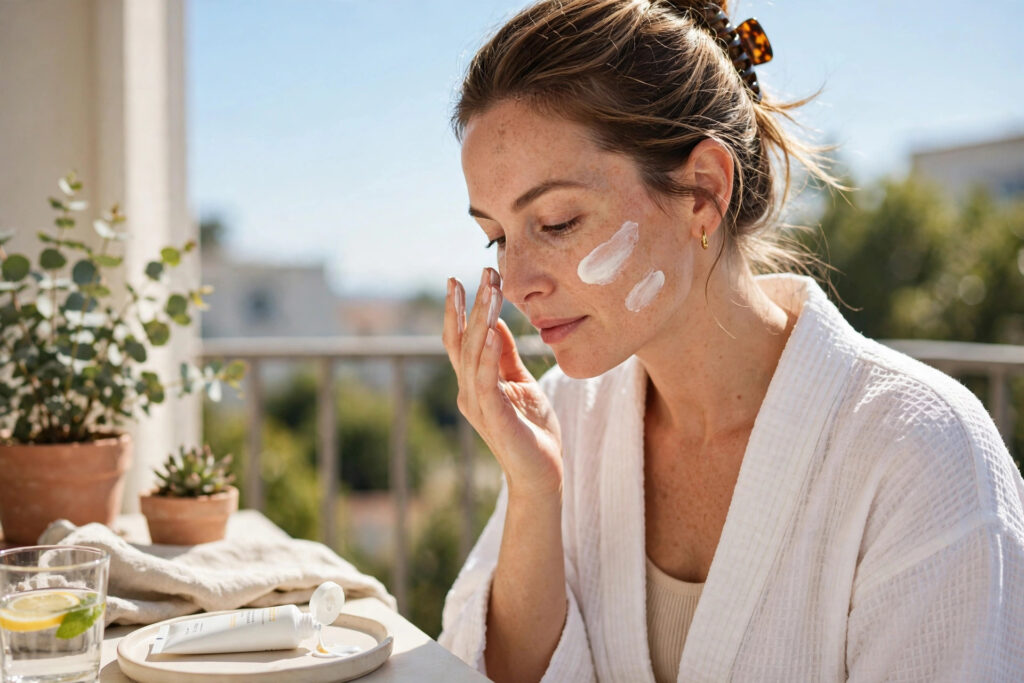
Step 4: Use Sunscreen Every Morning
Retinol can make skin more sensitive to sun exposure, so daily SPF is essential. In the morning, use a gentle cleanser, moisturiser, and sunscreen as part of your skincare routine.
What to Avoid Mixing at First
At first, avoid using retinol on the same night as strong exfoliating acids or a strong vitamin C serum, because combining several active ingredients can increase irritation. A simple approach is to use vitamin C in the morning and retinol at night, on different days if needed. Hyaluronic acid serum and a plain moisturiser are usually comfortable companions for retinol, because they support hydration.
In your first month, keep the rest of your routine gentle: a mild cleanser, a plain moisturiser, and sunscreen each morning are enough while skin adjusts. Avoid adding a second new active ingredient in the same month, because it is hard to know which product caused irritation if you change several things at once. If skin feels dry, use retinol less often rather than stopping all skincare, and return to the simple routine that felt comfortable.
Common Mistakes to Avoid
1. Starting Too Strong, Too Often
Daily use of a high strength from day one is the most common cause of peeling and irritation. Low and slow is the safer path.
2. Skipping Moisturiser
Moisturiser helps support the skin barrier while skin adjusts to retinol. Use a gentle, fragrance-free moisturiser after retinol.
3. Forgetting Sunscreen
Morning SPF is not optional with retinol. Without it, you lose much of the benefit and increase sun sensitivity. For general sun-protection guidance, see the American Academy of Dermatology.
Frequently Asked Questions (FAQ)
1. Should I use retinol in the morning or at night?
At night is the usual choice, because retinol can increase sun sensitivity and because the evening routine allows moisturiser to support skin overnight.
2. How much retinol should I use?
A pea-size amount for the whole face is enough. More product does not mean faster cosmetic results.
3. Can I use retinol with vitamin C?
Many people use vitamin C in the morning and retinol at night. Avoid layering both strong actives at the same time until skin is comfortable.
4. What if my skin feels irritated?
Pause retinol, use only gentle cleanser and moisturiser for a few days, and restart less often. Start slowly, stop if irritation persists, and consider a dermatologist for medical concerns.
Conclusion: Low, Slow, and Consistent
Retinol rewards patience. Start low, use a pea-size amount, increase slowly, moisturise well, and never skip morning sunscreen. But here is the most important takeaway: consistency at a comfortable strength beats a strong formula used inconsistently. For help choosing a formula, read our best retinol serum guide, and keep the skincare routine simple.