Vacation sunscreen is a range of sun-protection products from Vacation®, the brand known for its retro poolside styling and scented formulas. If you are considering Classic Lotion SPF 50, start with the label, your skin’s preferences, and how you plan to use it. Attractive packaging can make a product memorable, but a practical sunscreen routine matters more than the holiday aesthetic.
This guide explains what to check before buying, how to fit sunscreen into your routine, and common application mistakes. It is a researched buying guide, not a hands-on product test or a claim that one formula suits everyone. For everyday layering, see our morning skincare routine and product order.
Quick Verdict: Vacation Sunscreen at a Glance
Vacation Classic Lotion SPF 50 is a broad-spectrum, fragranced lotion with an 80-minute water-resistance claim. It may appeal to people who enjoy a scented body sunscreen. Fragrance-sensitive readers should check the full ingredient list and consider an alternative that better matches their needs. These specifications come from the official Classic Lotion SPF 50 product page; they should not be assumed to apply to every Vacation product.
Vacation Sunscreen Comparison: What to Check
| Buying question | Classic Lotion SPF 50 | Why it matters |
|---|---|---|
| What protection is listed? | Broad-spectrum SPF 50 | Read both the SPF number and broad-spectrum wording. |
| Is it water-resistant? | 80 minutes | Water resistance is time-limited, not waterproof protection. |
| Does it contain fragrance? | Yes | Scent is a preference; it is not a measure of protection. |
| Is this a personal wear test? | No | Texture, eye comfort and finish have not been independently tested here. |
What Makes Vacation Sunscreen Different?
Vacation positions its sunscreen around a nostalgic leisure experience. Classic Lotion uses a signature scent, and the brand describes the formula as lightweight and designed to rub in easily. Treat those finish descriptions as manufacturer claims rather than a promise about your own skin. Your experience can depend on how much you apply, the products underneath, and whether you are wearing it on your face or body.
When comparing options, write down three priorities before shopping: where you will apply it, whether you want fragrance, and whether you need water resistance. This keeps the choice focused. Someone looking for a body lotion for a pool day may want a different experience from someone choosing a facial sunscreen under makeup.
Ingredients: Read the Exact Product Label
The Classic Lotion SPF 50 label on DailyMed lists avobenzone, homosalate, octisalate and octocrylene as sunscreen actives. It also lists fragrance. Formulas and packaging can change, so compare the ingredient list on the item you are buying with your known sensitivities. Do not assume that every lotion, gel or spray from the same brand shares an identical formula.
An ingredient list is useful for checking what you prefer to avoid, but it cannot predict your personal experience perfectly. If you already know a product irritates your skin, do not keep using it because its branding or reviews are appealing. For a simpler starting point, our guide on how to start a skincare routine explains how to avoid introducing too many products at once.
How to Use Vacation Sunscreen in Your Routine
1. Keep the Layers Underneath Simple
Build a routine you can repeat comfortably: cleanse, add your usual skincare if needed, then apply sunscreen as the final skincare layer before makeup. Let the previous products settle rather than rushing through several wet layers. Do not mix sunscreen into moisturiser or foundation; use it separately so you can apply an even covering.
2. Apply Before Going Outdoors
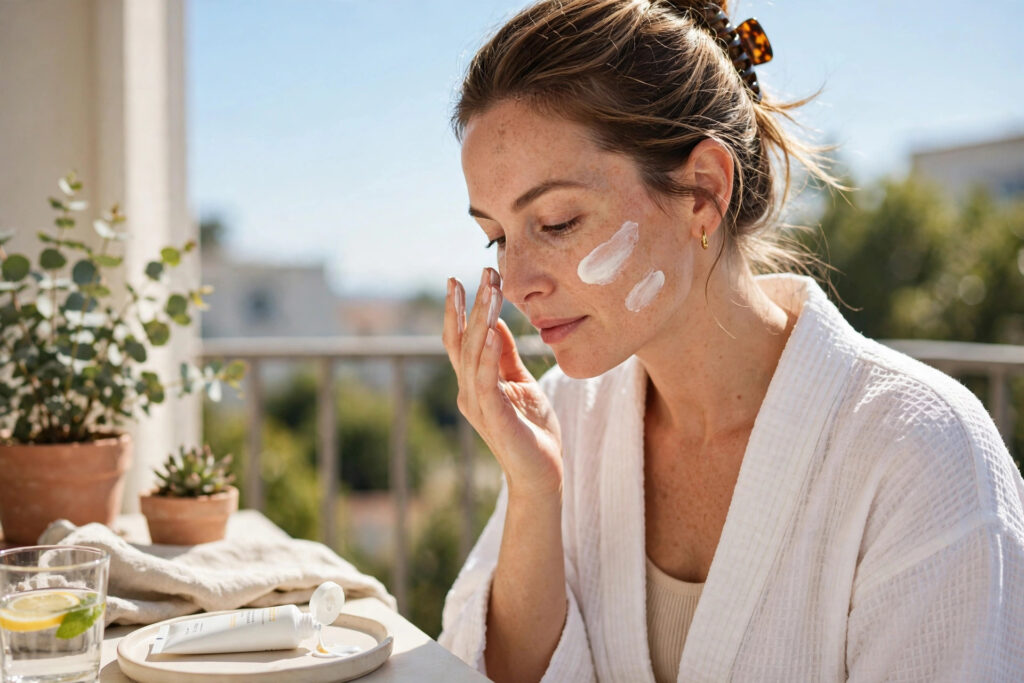
Follow the directions on your exact bottle. Classic Lotion SPF 50 instructs users to apply liberally 15 minutes before sun exposure. Plan that step before leaving for the beach, the pool or your daily walk. Applying only after you have arrived makes it easier to forget areas or rush the process.
3. Cover Exposed Areas Thoroughly
The American Academy of Dermatology’s application guidance recommends broad-spectrum, water-resistant SPF 30 or higher. Most adults need about one ounce to cover exposed body skin, with the amount varying by body size and clothing. Remember often-missed areas such as the ears, neck and tops of the feet. Ask for help with areas you cannot reach.
4. Make Reapplication Part of the Plan
For Classic Lotion SPF 50, the label directs reapplication at least every two hours, after 80 minutes of swimming or sweating, and immediately after towel drying. Set a reminder and keep the bottle accessible. A water-resistance statement does not mean a morning application lasts for an entire day in the water.
Who Might Prefer a Different Formula?
If you dislike scented skincare, the signature fragrance may be a reason to choose something else. If you are buying specifically for your face, compare face-focused options and their labels rather than assuming a body lotion will feel ideal under makeup. For very reactive skin or a history of sunscreen reactions, discuss suitable choices with a dermatologist.
For oily-feeling skin, think about the complete routine rather than expecting one sunscreen to solve every concern. A heavy moisturiser plus several serums can make it harder to judge a new formula. Keep your other products familiar while you assess comfort. Our niacinamide serum buying guide can help you keep optional treatment steps in perspective; a serum never replaces sunscreen.
Common Mistakes to Avoid
Choosing by Scent or Packaging Alone
Enjoying a product’s appearance is fine, but make the label your first checkpoint. Check the exact product name, SPF, directions and expiry information. Similar-looking packaging does not mean two formulas have the same instructions.
Using Too Little to Avoid a Shiny Finish
If the amount needed feels uncomfortable, look for a texture you can wear as directed rather than intentionally underapplying. Try simplifying the layers underneath first. Comfort matters because the best purchase for your routine is one you will use consistently and correctly.
Relying on Sunscreen Alone
Use shade and sun-protective clothing alongside sunscreen. A hat and a cover-up are useful parts of a pool or beach plan. Keep the bottle away from excessive heat and direct sunlight as its label advises; do not leave it baking on a hot dashboard.
Frequently Asked Questions (FAQ)
Is Vacation sunscreen good for daily use?
It can be considered as part of a daily sun-protection routine if the exact formula suits your skin and you follow its directions. This guide does not establish that it is better than other brands. Choose by protection, comfort, ingredients and practical use.
Can I use Vacation sunscreen on my face?
Read the directions for the exact product you own and keep it out of your eyes. A body lotion may feel different from a face-specific product. This article has not tested its finish, makeup compatibility or eye comfort.
Is Vacation sunscreen waterproof?
No. Classic Lotion SPF 50 is labelled water-resistant for 80 minutes. Follow its reapplication instructions, including after towel drying. Do not interpret water resistance as permission to skip top-ups.
Does Vacation sunscreen replace moisturiser?
Treat moisturiser and sunscreen as separate decisions. Use a moisturiser underneath if your skin needs it, but do not dilute your sunscreen by mixing the two together. Keep the sunscreen application consistent with its label.
Does a higher SPF mean I can stay outside longer?
Do not use the SPF number as a timer for sun exposure. Continue to reapply as directed and combine sunscreen with shade and protective clothing. No sunscreen makes prolonged sun exposure risk-free.
Conclusion: Choose Protection You Will Use
Vacation sunscreen may suit readers who enjoy its scented, holiday-inspired approach, but the right choice still comes down to the exact formula and how you use it. Check the label, apply adequately, and keep reapplication easy. For the next step, use our morning skincare routine checklist to fit sun protection into a manageable daily habit.
Editorial note: Product details were checked against the manufacturer’s page and published labelling. This article provides general information, not personal medical advice. No independent wear test or dermatologist review is claimed.